


On October 2023, Dr. Dan Plews did the thing I’m trying to do.
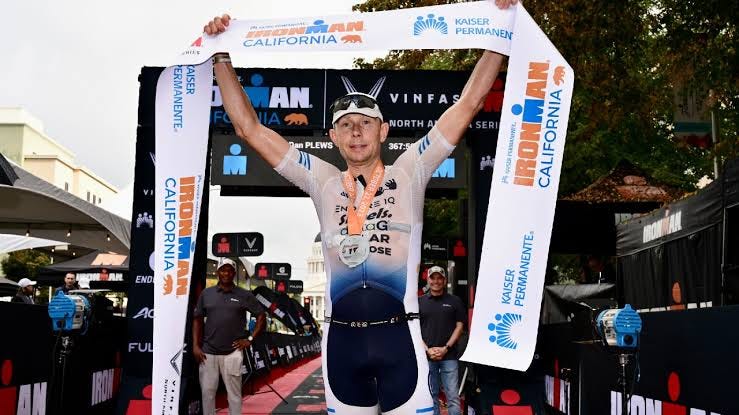
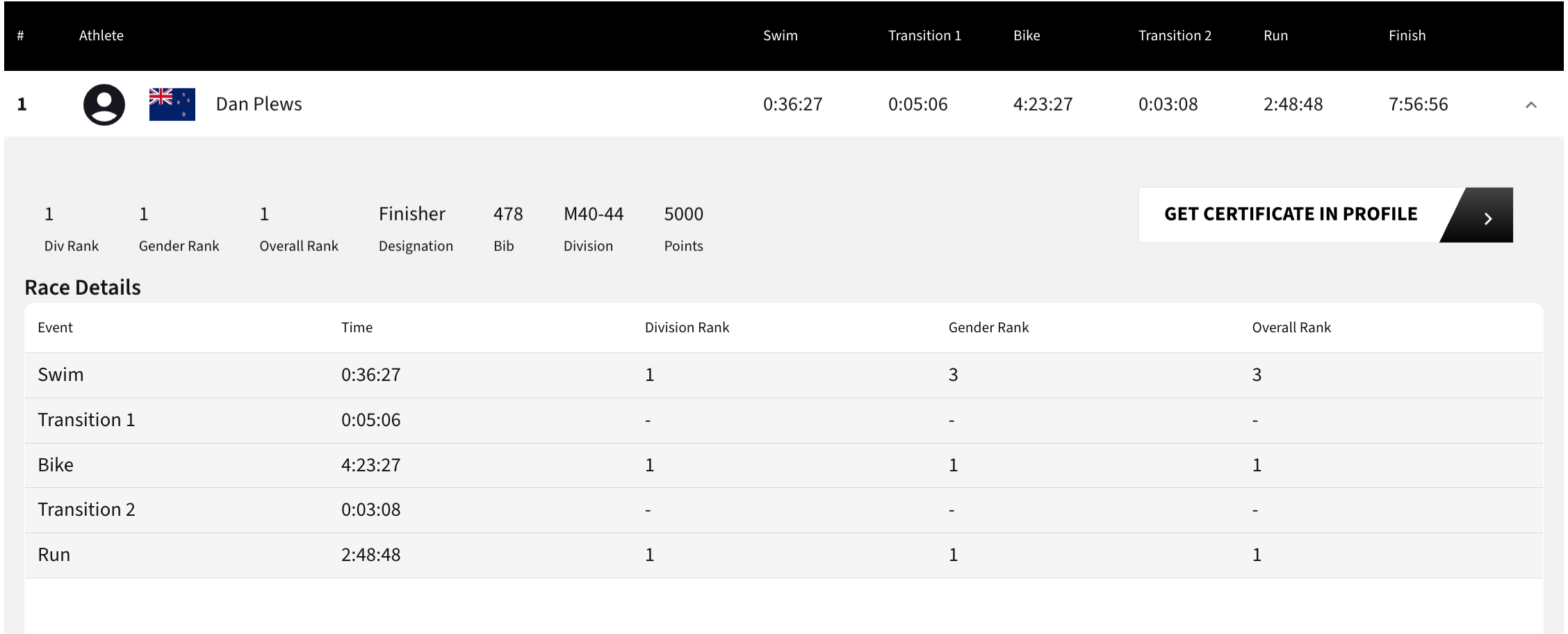
He went to IRONMAN California and won the race outright in 7:56:56, splitting 36:27 / 4:23:27 / 2:48:48.
It’s still one of the fastest amateur Ironman performances ever recorded, and it happened on the exact course I’ll be racing next month.
Same river. Same roads. Same marathon. Same goal.
Sub-8.
Dan is also not just some fast age grouper who had one magical day. He’s the founder of Endure IQ and ENDUROX, Head of Research and Innovation at Pillar Performance, a Senior Researcher at AUT University’s SPRINZ, and the current Kona age group course record holder.
So when you’re four weeks out from trying to break eight hours on the same course, and the guy who already did it is willing to answer questions, you ask him everything.
I wanted to know how he paced the bike, how he approached the run, when he knew sub-8 was really possible, and what advice he had for the final build.
The answer was not sexy.
No magic workout.
No secret formula.
No “here’s the one thing nobody is doing.”
Just specificity.
Do the work that matters. Do the sessions you already trust. Spend time around race pace. Don’t change everything now just because the race is getting close.
Basically: don’t panic. Don’t get cute. Don’t go full triathlete brain.
I’m not treating Dan’s race as a blueprint I can copy exactly. I’m treating it as proof that the course allows it, and a reminder that the final month is about execution, not reinvention.
Here’s what Dan had to say about his 7:56 at IRONMAN California, and what I’m taking from it heading into the final stretch of my own sub-8 attempt.
What was the motivation behind trying to go sub-8 hours at IRONMAN California?
I read the book Die With Zero, and I thought I’d never really done any fast Ironmans. I’d just done Taupo, and I’d only done Kona. I’d just passed my 40th birthday, and I thought it was a good opportunity to do a faster Ironman.
I did Roth, but it didn’t really work out because I was injured just before it. I thought, “I’ve done all this training, so let’s have a crack at Ironman California.”
It was between this race and Florida in the end, and I picked California just because it was much easier to get there from New Zealand with a direct flight.
My fastest time at that point was 8:18 at Roth, and before that it was 8:24 at Kona.
On race day, how did you approach this race differently, knowing you were racing the clock (vs other competitors)?
It was always going to be a bit of a time trial, and I did quite a lot of the race on my own: all of the run, a lot of the bike, and the swim as well. It’s also a conservation game about conserving energy.
I did part of the bike with another fast Age group rider, Sean Mahoney, who was up front. We shared a bit of the load for the first half, but once he started getting a bit tired, I really wanted to push the last 40 to 50 km. I went on my own because I knew I needed to keep the average speed to a certain point, given my target time for the bike section: 4:20.
How did you pace the bike specifically — did you have a hard power ceiling you refused to exceed, and did you ever feel the pull to go harder than planned?
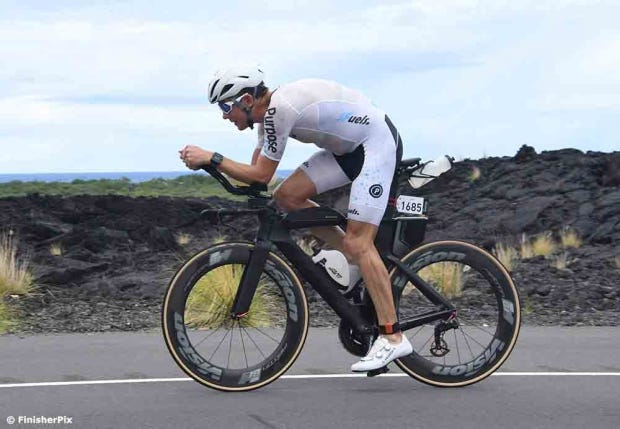
I kept an eye on my power on the bike and kept it at 270 to 280 W. My average for the whole ride was 277 W, but it was very comfortable. I pushed a little more power in the last 40 km, going a little above that at the start. I wanted to close the gap to the front guy who was leading the age group race, because I knew that if I closed on him, we would both do better together. Towards the end of the bike, I was pushing closer to 300 W.
Similar question on the run. Your split looked pretty even. Was this your intention to find your pace and stick to it?
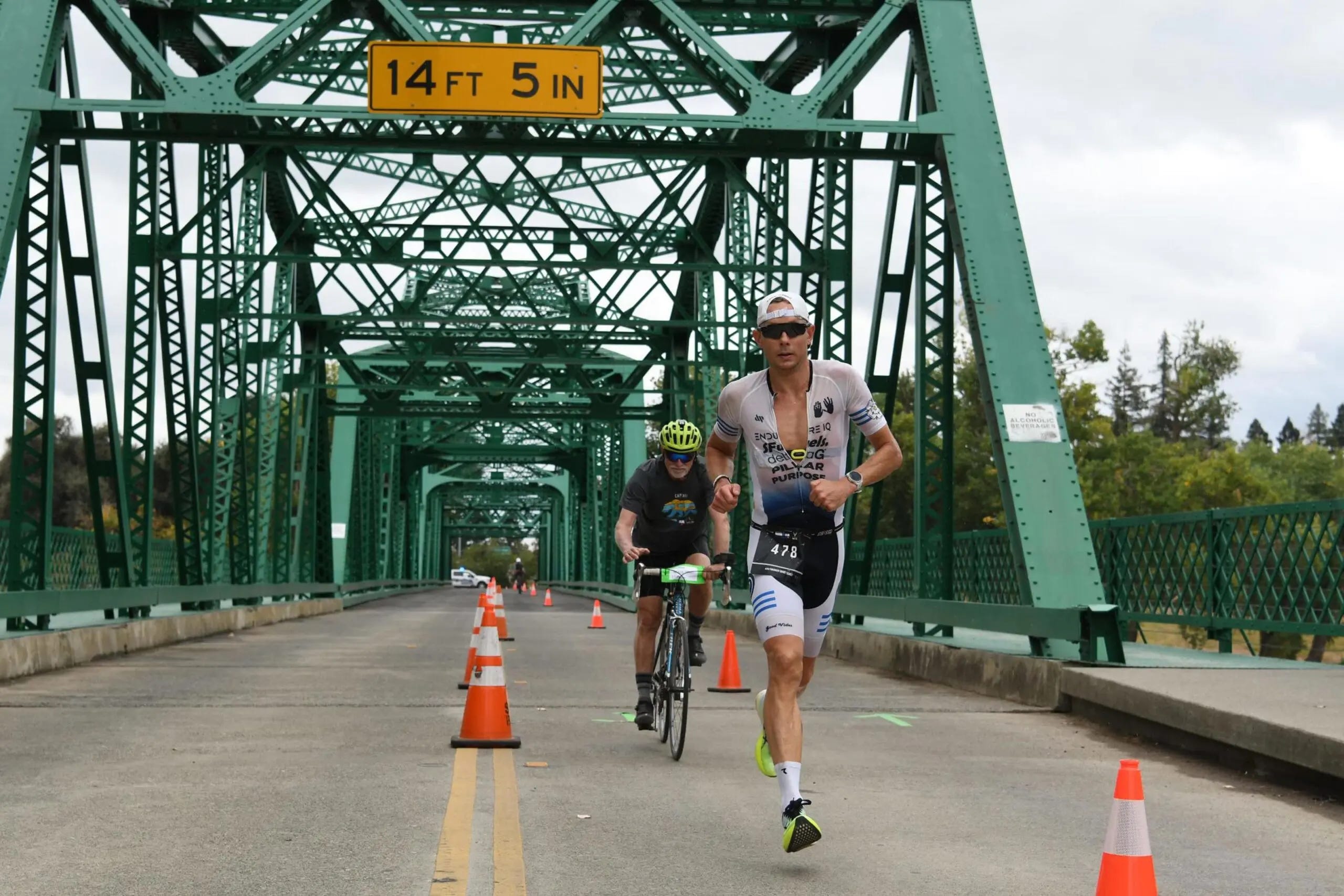
My run split was 2:48, and the run was 42.8 km on my Garmin, so it was the equivalent of a 2:46 run.
I had a plan to always hold myself back in the first 30 km, saving anything I had left for the last 12 km.
My splits showed that I had my fastest 10 km as my last 10 km because I really went for it to get a fast time.
At what point in the race did you know that you were actually going to break 8 hours?
I was pretty confident coming off the bike. At the time, I was coaching Chelsea Sodaro, and she was watching the race. I ran past her and asked what time I would have to run to do a sub-8. She said, “You have to run a 2:50 marathon.” I thought, “Well, that’s well within my capabilities,” but surprisingly, California isn’t that much of a fast course, especially on the run.
As you’ve probably seen from lots of the results, no one’s really got close to breaking 8 hours since I was on that course. Also, it absolutely poured with rain on that course, literally to the point where some of the paths were flooded. They got really slippery under some of the bridges, which definitely didn’t help.
I had to stop once to get a stone out of my shoe and once to go to the toilet
Was there a point in that race — or in training — where you genuinely doubted you’d break 8 hours?
Doing this for quite a long time, my aim was always to try to get back into Kona 2018 shape because I knew that was what I needed to break 8 hours. I did a key session just before I left, which included a really hard 4-hour bike with Ironman paces, followed by 3x3K. I ran the last 3K in under 9:40, which is pretty good running and even a bit faster than what I did for that same session in Kona 2018.
I’m just under 4-weeks out from IRONMAN California, any advice for the final build up to my sub-8 hour attempt?
At this time, specificity is absolutely key. Do the sessions you’ve done in the past that you know are a good litmus test for how well you’re going and are very specific to the event.
The more time you can spend around your race pace, the better, but obviously you can’t do too much too differently.
At this point in time, the best thing you can do is stick with the regular buildups that you’ve always done. Training is never that glamorous. It’s just about doing the same things well time and time again.
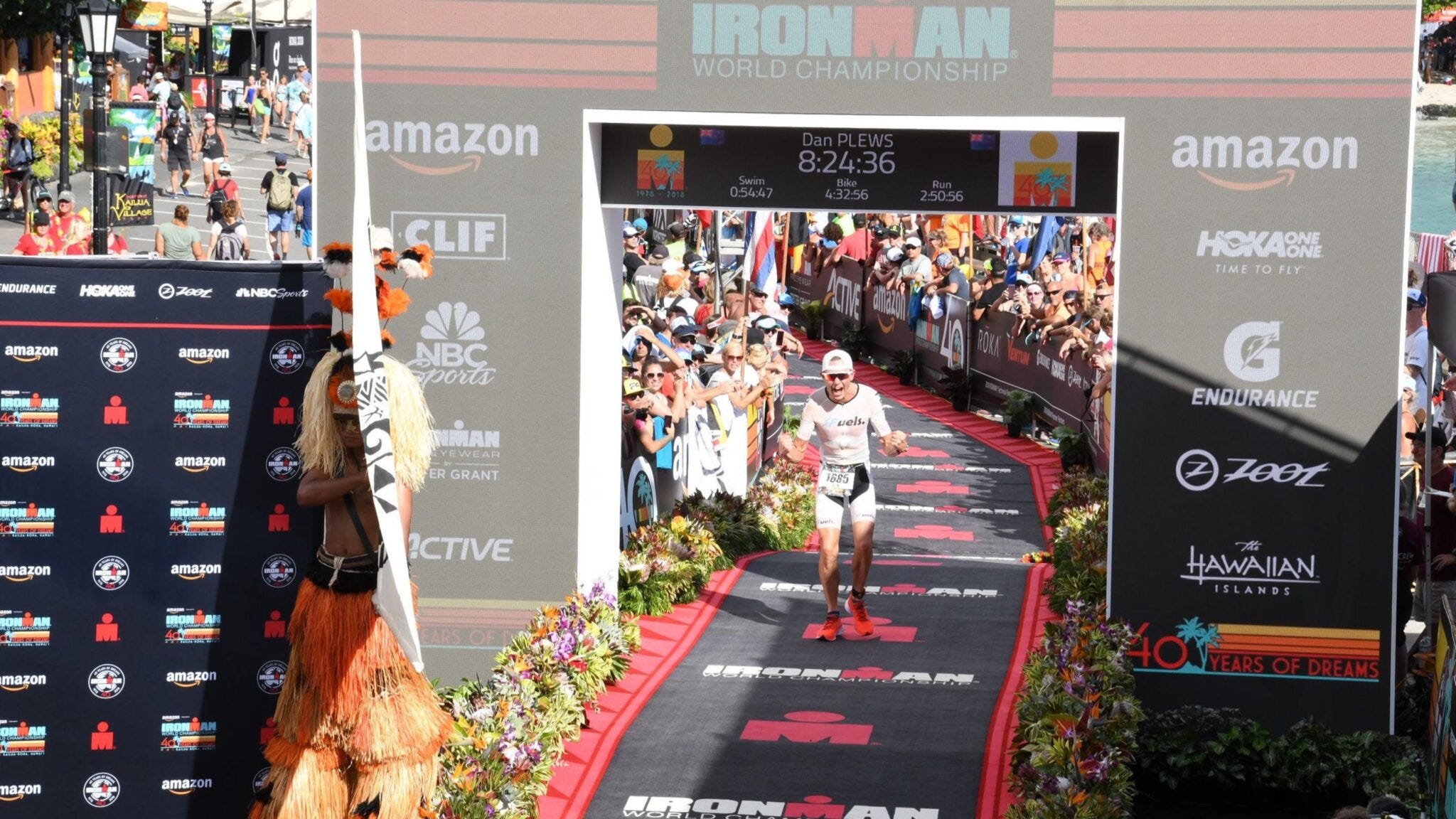
Kona is just around the corner. Your age group record of 8:24:36 still stands. Do you think it will fall this year?
To be honest, I’m absolutely amazed that this record still stands. I’d be very surprised if it doesn’t get broken this year, but it’s, of course, dependent on the weather.
I was just in Kona two weeks ago, and the weather was super, super windy. If it’s a really windy day, it’ll be tough time to beat. On a moderate or a good day, I would be very surprised if it’s not broken.
I’ve had it for so long now. I was saying to my wife the other day that I’m really quite impartial as to whether it gets broken. Obviously, I’d like it to stay, but it wouldn’t really bother me if it’s broken at all at this point in time. It’s been a good run!
My Takeaways
The biggest takeaway for me is that there’s no magic formula hiding in Dan’s race. No secret session. No perfect spreadsheet. No last-minute hack.
It was specificity. Race-pace work. Familiar sessions. Knowing what effort should feel like. And not doing something dumb just because the race is close.
That’s probably the part I need to hear most right now. I’m fit. I’m excited. I’m also 3.5 weeks out, which is exactly when triathletes start inventing problems and calling them “optimization.”
So the job now is boring in the best way: sharpen the work, stay healthy, keep the confidence, and don’t get cute.
I feel fit, confident, and excited.
Do I think that I’ll go sub 8 in less than a month?
I do.
But if I don’t, that’s okay too.
I’ve busted my ass and put in the work.
All that’s left to do is enjoy the last few weeks.
Want More from Dan?
Thanks again to Dan for taking the time to chat with me about his sub-8 performance. If you’re interested in learning from Dan, check out all the Endure IQ courses online. I’ve been through them all and they are absolutely worth it.
8 Secrets of the World’s Fastest Age-Grouper
World Champion triathlon coach breaks all-time Age-Group record for an Ironman race
World champion coach sets fastest-ever age group time at Ironman California